
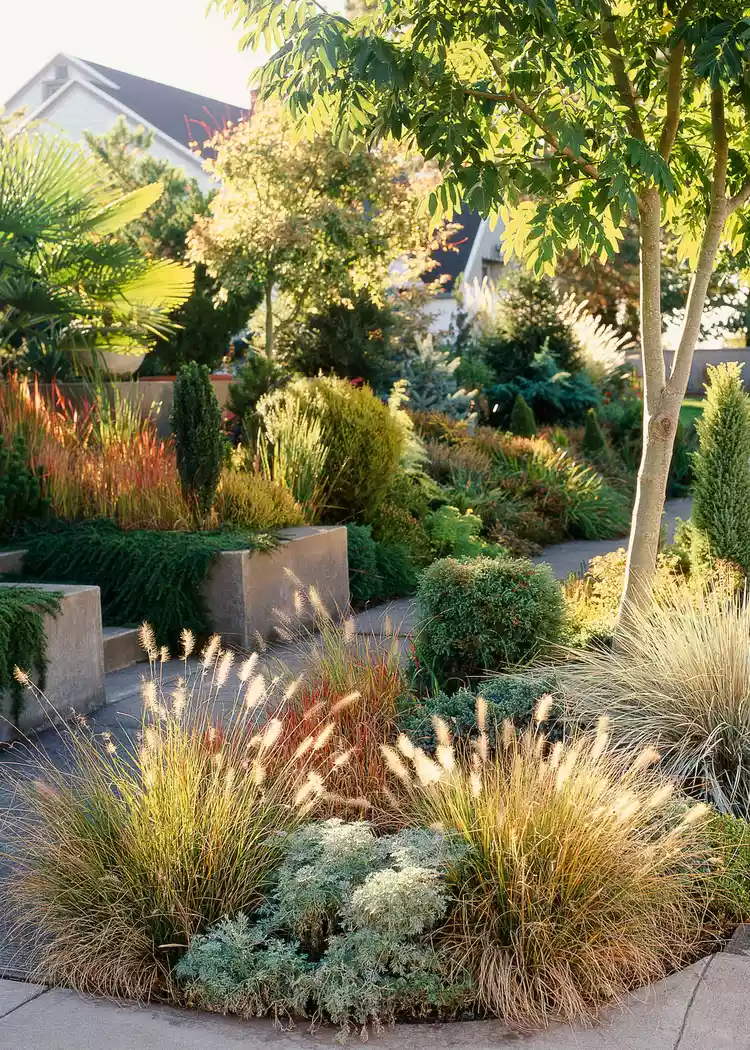
Don't let water use restrictions or a lack of rain put a damper on your garden dreams. Plenty of beautiful plants thrive in dry conditions, and xeriscaping techniques can help you make the most of limited moisture. Create a gorgeous, water-saving yard with these drought-tolerant landscaping ideas.
Reduce Your Lawn
Lawns are notorious water-guzzlers and many types of turf grass require irrigation to stay green during a drought. Replacing at least part of your lawn with water-wise plantings will help you create a more drought-tolerant landscape. Here, pretty beds of drought-tolerant perennials near the house and sidewalk take the place of thirsty grass in this front yard.
Use Decorative Hardscape Elements
Many plants supply showy blooms but require tons of water; in place of them, hardscape elements like this circular walkway of pavers around a gravel center furnish visual interest. Garden art, like the sculptures of a whimsical cat and an orb, also can offer interest in place of water-needy plants. This water-saving landscape still looks lush, thanks to the careful selection of shrubs and evergreens that require very little supplemental water (except in times of extreme drought). Drought-tolerant groundcovers, such as the thyme shown here weaving between large stones, provide a good way to catch rainwater that may run off the hardscaping, especially on a gentle slope.
Plant Your Parking Strip
The spaces between the curb and sidewalk are sometimes known as "hell strips" because they tend to be hot, dry places. But they can also become a lush oasis with the right water-wise design. Drought-tolerant plants such as ornamental grasses, low-growing evergreens, and artemisia in this parking strip garden help catch rainwater runoff before it hits the street, reducing soil erosion and downstream pollution while conserving water.
Install a Water Feature
A fountain may not seem like a first choice in a drought-tolerant garden, but good design can enable the feature to capture and recycle water. Here, a small raised pond with a fountain dresses up this water-wise yard. The showy foliage of Japanese forest grass and lamb's ear help soften the hardscaping and counteract the warming effect of the pavers. Groundcovers like the thyme shown here also help provide a cooling effect in key areas, such as wide gaps between stones.
Rely on Water-Thrifty Plants
This drought-tolerant garden uses several water-saving strategies. A mix of tough but colorful perennials such as the red-flowered penstemon don't require much supplemental moisture to thrive. Several varieties of evergreens that don't mind dry conditions offer structure, height, and color. An oversize boulder fills in a gap between the plants, adding an unexpected focal point.
Pick Porous Materials
Help more of the water from irrigation systems or natural precipitation reach your plants by choosing porous materials for hardscape elements. That way, the moisture has a chance to be absorbed by the soil instead of running off. In place of mortar in this garden path, a porous material between paving stones lets rain soak into the soil. A layer of mulch between the drought-tolerant plants also helps reduce water loss while suppressing weeds.
Test Garden Tip: Many plants that have gray or silver foliage have excellent drought tolerance. These include the santolina, lamb's ear, lavender, and Russian sage growing in this garden.
Design Water-Smart Slopes
A steep slope can be challenging when it comes to managing water run off. This tiered garden bed offers a solution to a sloped area. Large rocks, groundcovers, and a sturdy raised bed on one corner work together to reduce water loss and erosion.
Test Garden Tip: When plants need watering, do so early in the morning or late in the day to reduce water loss from evaporation.
Plant Densely
Densely planted flowerbeds help shade soil, which slows moisture from evaporating in the sun's heat. The closely spaced plants also crowd out weeds, reducing the need for mulch. Here, a collection of water-wise plants, including lavender, catmint, goat's beard, and lady's mantle, all require minimal water to create a lush-looking garden.
Go for Groundcovers
Use groundcovers as a living mulch to slow water evaporation in your drought-tolerant landscape. These low-growing plants also can help minimize water runoff from hardscaping such as steps and sidewalks. Here, water-wise perennials such as thyme, sedum, and sea thrift are small enough to be tucked between and around these stone steps. Plus, they add welcome color with their blooms.
Make the Most of Mulch
Mulch is essential for creating a water-saving landscape. In this garden, gravel serves as an inorganic, low-maintenance mulch around drought-tolerant succulents and grasses. Plus, the gravel makes a permeable walkway, helping to prevent water runoff.
Group Plants with Similar Water Needs
The easiest way to design a drought-tolerant landscape is with plants that don't require a lot of water to thrive. Native plants often make good choices because they're well adapted to your region's growing conditions. Plants from drier areas of the world, such as lavender shown here, also are naturally quite drought tolerant. Just be sure to group plants with similar watering needs and light requirements together so they all grow well together.
Test Garden Tip: Confine plants that require more moisture to containers so you can target a smaller space for any extra watering instead of having to water your entire garden.