
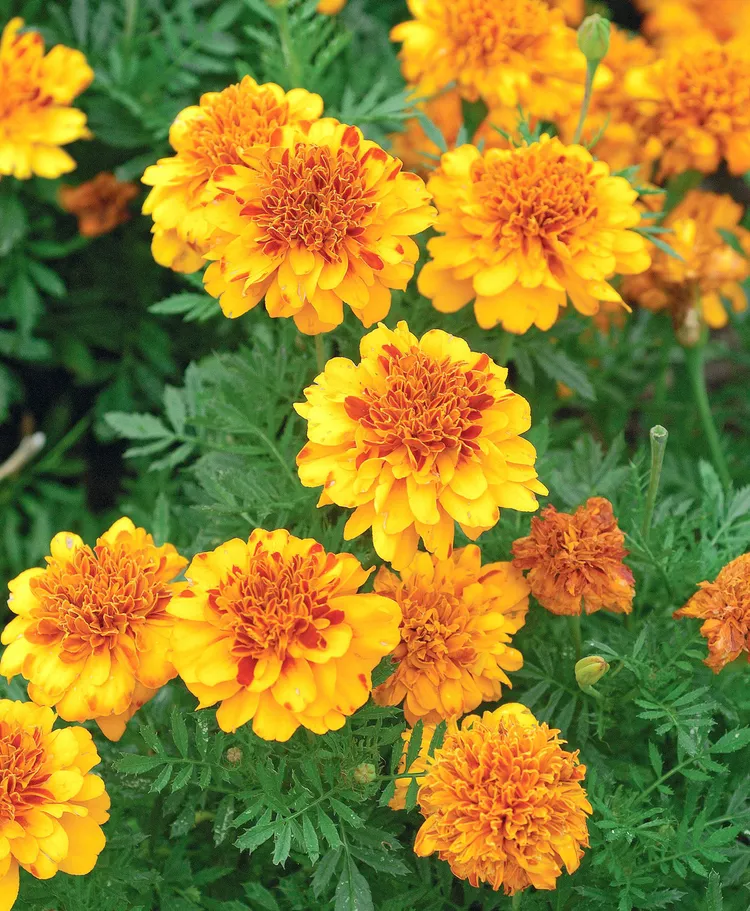
A garden favorite for their brightly colored flowers, French marigolds are easy to grow and care for. These heat-loving annuals last the entire growing season, blooming away until frost. French marigolds typically come in warm oranges, yellows, and reds. Some varieties have a single row of petals, while others have pompon-like, petal-packed double blooms. Plus, it seems like a new marigold shade or petal type is introduced each year.
Plant breeders are always looking for ways to make French Marigolds do just a little more. A recent innovation was a color breakthrough—the first pink marigold. They are also finding ways to make more disease-resistant, longer-blooming varieties with bigger blooms.
French Marigold Overview
| Genus Name | Tagetes patula |
| Common Name | French Marigold |
| Plant Type | Annual |
| Light | Sun |
| Height | 6 to 24 inches |
| Width | 6 to 18 inches |
| Flower Color | Orange, Red, Yellow |
| Foliage Color | Blue/Green |
| Season Features | Fall Bloom, Spring Bloom, Summer Bloom |
| Special Features | Fragrance, Good for Containers, Low Maintenance |
| Propagation | Seed |
| Problem Solvers | Deer Resistant, Drought Tolerant |
Where to Plant French Marigolds
French marigolds grow in full sun and thrive in hot summers. While they are somewhat more tolerant of wet conditions than African marigolds, they won't bloom well in cool, moist areas. These annuals are cheerful additions to garden beds and borders and are excellent container plants.
How and When to Plant French Marigolds
French marigolds can be purchased as nursery plants or grown from seed.
Set out nursery plants early in the spring after the last frost in a location that receives full sun and has well-draining soil. French marigold plants should be planted somewhat deeper than in their nursery containers and spaced 9 to 18 inches apart, depending on variety.
Start French marigolds from seed by starting them indoors four to six weeks before the end of winter in seed-starting mix. Cover them with a scant 1/4 inch of soil and moisten them. They need a warm area of about 70°F to 75°F to germinate. After they are sown, seedlings pop up in a week or two. Transplant them into the garden after the last frost. The seed can also be sown directly into a garden bed after all danger of frost has passed.
French Marigold Care Tips
Often one of the first plants a child grows, these low-maintenance annuals are super easy to care for.
Light
French marigolds perform best in full sun, which is necessary for the plant to form large, dense blooms and lush foliage. The plant will live if planted anywhere other than full sun, but flower production is severely affected.
Soil and Water
French marigolds do best in well-drained soil that doesn't stay wet for long periods. For the best drainage, add compost to the soil.
Temperature and Humidity
Hot summer temperatures pose no problem for French marigolds. The optimum flower production occurs when the temperature is in the 68°F to 75°F range, but the plant continues to bloom outside this range, just not as profusely. They tolerate a wide humidity range. If the summer is especially humid, they might develop powdery mildew.
Fertilizer
Unless the garden soil is rich or can be amended before planting, dig in a slow-release granular fertilizer to support the plants. They likely won't need any more fertilizer than that. Overfertilization results in increased foliage, not flowers.
If you feel your plants need a boost midseason, apply a liquid fertilizer low in nitrogen, following the product instructions.
Pruning
Annual marigolds don't need pruning, but as a marigold's flowers fade, pick them off to focus the plant's energy on making more flowers rather than making seeds.
Potting and Repotting French Marigolds
Small French marigolds are excellent selections for pots outside in the summer. Unless they are moved inside before the first frost, they will die along with any in-ground marigolds. Plant them in a container with good drainage and lightweight potting mix. A 6-inch pot is big enough for one French marigold, or two or three plants can fit in a 12-inch pot. Don't crowd the plants; they need good air circulation. They also need at least six hours of sunlight daily, so place them in a south-facing window. Repotting is usually not necessary.
Pests and Problems
When French marigolds are planted in part shade, they will likely get fungal diseases, such as powdery mildew. Marigolds are also prone to spider mites in the dry heat of the summer, so watch for fine webbing and treat with insecticidal soap as needed.
How to Propagate French Marigolds
At the end of the year, if you want to collect seeds for the following spring, leave a few spent blooms on the plants and allow them to ripen and dry thoroughly. Start them indoors six weeks before the end of winter in seed-starting mix. Note that harvested seeds produce genetically different plants from the hybrid parents, so there may be some variability in flower color and overall plant growth.
Order seed or live plants from a nursery if you want identical plants.
Types of French Marigolds
Disco Queen Marigold
Tagetes patula 'Disco Queen' produces orange-red flowers ringed in yellow on long-blooming plants that grow 1 foot tall and wide.
Durango Red Marigold
Tagetes patula 'Durango Red' produces orange-red flowers all summer on plants that grow 1 foot tall and wide.
Little Devil Fire Marigold
Tagetes patula 'Little Devil Fire' bears double red-and-yellow flowers on compact plants that grow only 8 inches tall and wide.
Striped Marvel Marigold
Tagetes patula 'Striped Marvel' offers bold burgundy-and-gold striped blossoms on mounded plants.
Yellow Gate Marigold
Tagetes patula 'Yellow Gate' bears 3-inch-wide blooms atop rounded, 10- to 12-inch-tall plants.
French Marigold Companion Plants
Bidens
Bidens is a perfect container plant. It spills down the edges of window boxes, large pots, and planters with starry, yellow flowers and ferny, green foliage. Some varieties are fragrant, so plant them where you can enjoy their sweet scent. Bidens likes rich, well-drained but moist soil. While it's a perennial in Zones 8-10, it's usually grown as an annual.
Moss Rose
Moss rose is the gardener's choice for the hottest, driest, most problematic spots in the garden—even a clay strawberry pot in full sun. This succulent plant thrives in heat, drought, and lousy soil, rewarding gardeners with nonstop color. Coming in sunny, warm reds, oranges, magentas, and yellows, moss rose looks at home in a sun-drenched area. There's also a whole pastel color palette for moss rose—creamy white, pink, and peach varieties. It often happily reseeds, coming back every year with gusto.
Zinnia
Want fast color for just pennies? Plant zinnias! A packet of seeds will fill an area with gorgeous flowers in a fantastic array of shapes and colors—even green! And it will happen in just weeks. There are dwarf types, tall, quill-leaf cactus, spider, multicolor, seed blends for cutting, blends for attracting butterflies, and more.
Zinnias are so highly attractive to butterflies that you can count on having these fluttering guests dining in your garden every afternoon. To attract the most, plant lots of tall, red or hot pink zinnias in a large patch. 'Big Red' is especially nice for this, and the flowers are outstanding and excellent for cutting. Zinnias grow quickly from seed sown right in the ground and do best in full sun with dry to well-drained soil.
Garden Plans for French Marigold
An Eye-Catching Kitchen Garden Plan
Enjoy a full summer of homegrown vegetables with this ornamental potager garden.
Easy Children's Vegetable Garden Plan
Enjoy growing healthy produce while spending time with little gardeners with this easy garden plan.